
What If OpenAI Craters?
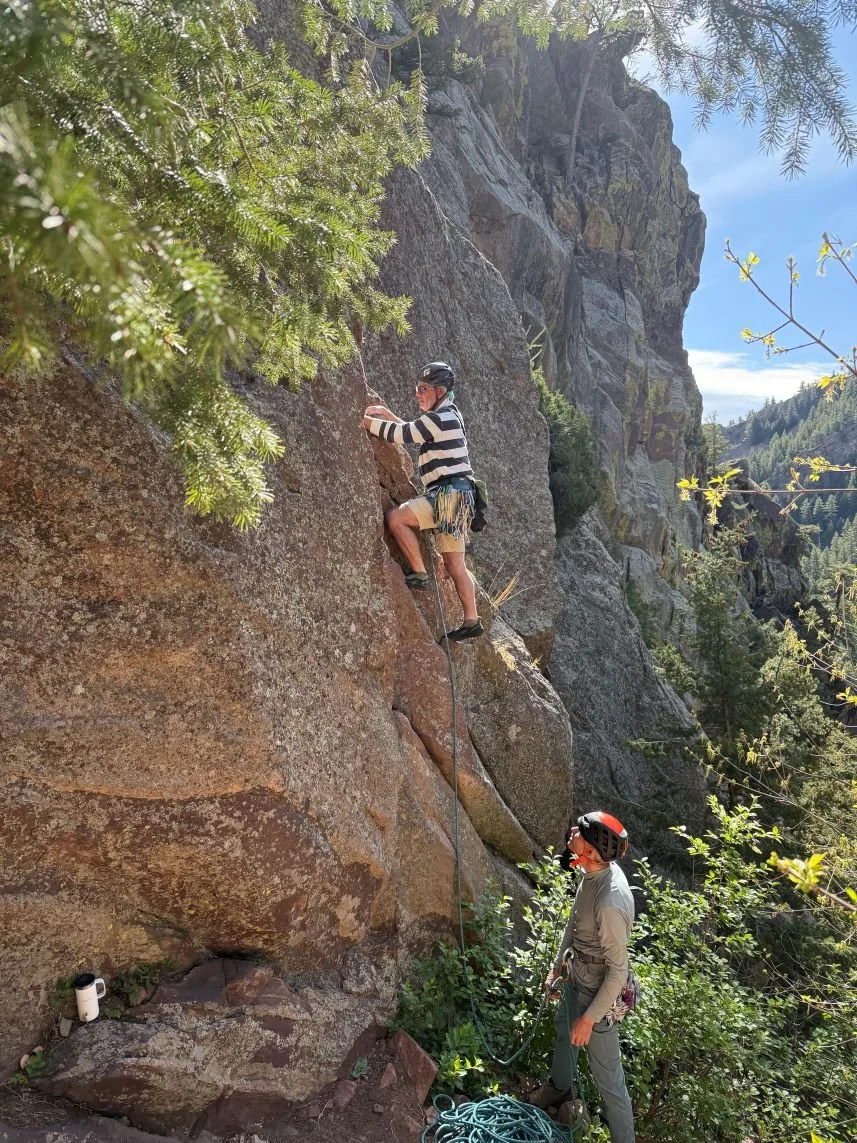
AMGA Executive Director Matt Wade belays Kyle on the unprotected opening moves of Verschneidung on the West Ridge of Eldo on Tax Day, 2026 – always a dicey day to go climbing! Photo by Weston Backcountry Owner, Leo Tsuo.
When you fall and hit the ground climbing, we call that “decking”. More colorfully, British climbers call it a “Desmond” for the Jamaican reggae artist Desmond Dekker. But when you’re way up there and hit the deck, we call that a “crater” – pretty much the worst thing that happens in climbing.
Infrequently, our portfolio companies deck as well – they lose an important customer, the CEO experiences an existential crisis, or the market pivots away from their solution. Sometimes, all three. But it takes a real bubble to see a once valuable company crater.
During the last great technology bubble, we sold our Boulder Ventures II portfolio company, Compatible Systems to Cisco in March 2000. In those days, there was an advantage to tech consolidators like Cisco issuing stock instead of cash. We got Cisco shares for our Compatible investment, but we had to wait for free trading shares until May, 2000. Alongside the founder, Matt McConnell, we sweated the sixty days from closing until the liquid shares were delivered.
As one of the key players in the new internet economy, Cisco was the world’s most valuable company in the spring of 2000. Matt and I knew we were in a bubble and that our hard-won Compatible returns could vanish at any moment. This chart was particularly unsettling: in March, 2000, you could buy a single share of Cisco at 36 times revenue or a basket of twenty of the best companies in America at the same price:
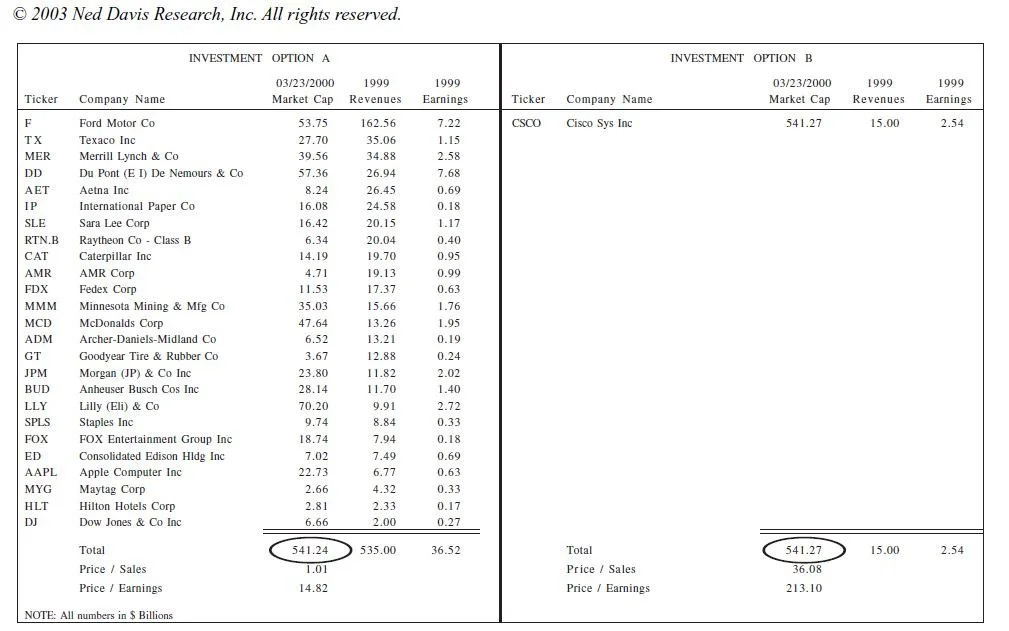
Cisco’s stock price topped out in March at $80, we got our free trading shares on May 9 at $64 and distributed them on May 11. Matt and I promptly sold every share we owned. Along with the rest of the dotcom bubble, Cisco cratered that summer and bottomed out in October 2002 at $8 per share, a 90% decline from its high in March, 2000.
Cisco was a great American technology company then and remains so today. As of June, 2026, Cisco trades at $130 per share. If Matt and I had held onto our Cisco shares instead of selling them, we’d be 2X in 26 years. There was nothing wrong with Cisco’s business in 2000, it was just way overvalued by enthusiastic stock market investors.
This summer, we’re witnessing the next great stock market bubble. Three private companies, SpaceX, Anthropic, and OpenAI, are together preparing to sell more than $200 billion of stock to the public in what would be the three largest tech IPOs in history. All three are growing revenues fast and all three are dramatically unprofitable. An interconnected industry of chip companies, datacenter providers, private credit funds, and software companies are dependent on SpaceX, Anthropic and OpenAI raising the capital they need to spend with these vendors to enable the build out of their AI infrastructure.
No one is more anxious for these liquidity events than the VCs that backed SpaceX, Anthropic, and OpenAI - a large portion of all venture capital portfolio markups are in these three deals! You can bet these same firms raised as much money as they could pitching their special access to these AI companies. Now it’s nail-biter time at these VC firms, all of them hoping to get their liquid public shares into the hands of investors before the reggae music stops.
In my opinion, OpenAI is the most likely of the three to crater. Its CEO, Sam Altman, has proven himself a skilled promoter and ruthless startup operator in one of the most competitive business environments in the world, Silicon Valley. He is good at Mafia. But none of his experiences as an entrepreneur or VC has prepared him to lead a large, fast-growing organization at the cutting edge of a new technology revolution. Compared to the loyal, cohesive teams at SpaceX and Anthropic, there’s been a lot of management turnover and Board turmoil at OpenAI.
I love the product from OpenAI and Anthropic, happily pay a monthly subscription for both, and use them every day in my work and in my life. I didn’t use them to write this post, but I did use them both to check for accuracy and I find it valuable to have two different AIs to compare against each other. It’s not clear to me that either model is better than Google, who also just raised $85 billion in cash from a stock sale to ensure that it doesn’t run out of money competing against Anthropic and OpenAI. No matter how good its product, I wouldn’t want to bet OpenAI’s success on outspending Google.
Big new technology markets invite lots of competition, and the top AI models are already being challenged by less expensive, opensource versions from China. Many large enterprise customers are using OpenAI and Anthropic to automate their business processes but so far are seeing less value and slower progress than forecasted. Just like in the internet bubble, those gains will come, it’ll just take more time than people expect.
All these trends point to valuation. OpenAI already faces challenges in management, governance, access to capital, and competition. Its last round of venture capital in 2026 valued OpenAI at 36 times revenue, the same as Cisco in the spring of 2000. Here at the top of the AI Bubble, this summer’s OpenAI IPO will try and price its shares at a sales multiple higher than that.
What if OpenAI craters? At Boulder Ventures, we hope to remain outside the blast radius. That means backing serial entrepreneurs who can navigate the market when the dust settles, regardless of which frontier model is writing their code.